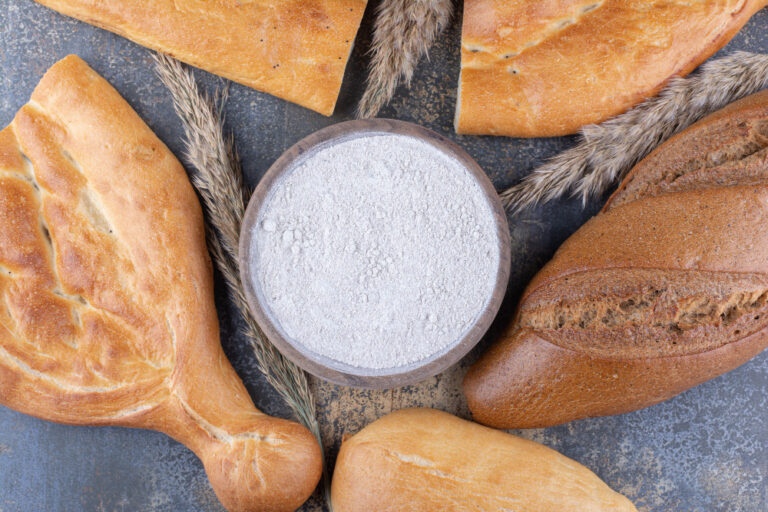
Discover how trehalose helps improve moisture retention, texture, flavour stability and shelf life across bakery, confectionery, dairy, beverages and frozen food applications.
Trehalose is an increasingly important functional carbohydrate in the food manufacturing industry. Unlike conventional sugars that are primarily used for sweetness, trehalose offers several additional functional benefits, making it a valuable ingredient for modern food formulations. From maintaining the softness of bakery products and protecting frozen foods against texture deterioration to improving flavour profiles in nutritional beverages and enhancing stability in confectionery, trehalose offers food manufacturers a versatile formulation solution. With approximately 45% of the sweetness of sucrose, trehalose provides a mild, clean sweetness without overpowering the natural flavour of the finished product. In this article, we explore what trehalose is, its functional properties, how it compares with conventional sweeteners and its applications across different food manufacturing categories.
1. What Is Trehalose?
Trehalose is a naturally occurring non-reducing disaccharide composed of two glucose molecules connected through an α,α-1,1-glycosidic bond. It is found naturally in various organisms, including mushrooms, yeast, fungi, bacteria, plants and insects, where it plays an important role in protecting biological structures against environmental stress.
Commercial food-grade trehalose is generally produced through enzymatic processing of starch-derived carbohydrates.
It is available as a white or almost-white crystalline powder and is readily soluble in water.
Basic characteristics of trehalose:
- Chemical formula: C₁₂H₂₂O₁₁
- Molecular weight: 342.30 g/mol (anhydrous)
- CAS number: 6138-23-4 (dihydrate form)
- Type: Non-reducing disaccharide
- Relative sweetness: Approximately 45% of sucrose
- Appearance: White crystalline powder
- Taste: Mild, clean sweetness
- Solubility: Water soluble
One of the most interesting characteristics of trehalose is that its functionality extends well beyond sweetness. Its molecular structure contributes to its ability to stabilise proteins, starches, fats and other food components during processing and storage.
2. Key Functional Properties of Trehalose
Trehalose offers several functional advantages that make it different from conventional sugars.
A. Moisture Retention
Trehalose helps maintain moisture balance in food products and can reduce undesirable changes in texture associated with moisture loss.
Its relatively low hygroscopicity, compared with certain other sugars and polyols, makes it useful in applications where moisture management and product texture are important.
Benefits:
- Helps maintain softness in bakery products.
- Reduces drying and hardening.
- Supports product freshness.
- Helps maintain desirable texture during storage.
Applications: Bread, buns, cakes, cookies, biscuits, nutritional bars and frozen dough.
B. Anti-Staling Properties
Staling is one of the major challenges in bakery manufacturing.
During storage, changes in starch structure, particularly starch retrogradation, contribute to bread hardening and loss of freshness.
Trehalose can help retard these changes and maintain desirable texture characteristics in bakery formulations.
Benefits:
- Helps slow down bread hardening.
- Supports softer crumb texture.
- Helps maintain product freshness.
- Improves the quality of frozen and thawed bakery products.
Applications: Bread, buns, burger rolls, pav, cakes, muffins and frozen dough.
C. Cryoprotection and Freeze-Thaw Stability
Freezing and thawing can cause undesirable changes in food texture, particularly in products containing water, proteins and starches.
Trehalose can help protect food structures during freezing and storage by influencing water interactions and stabilising biological and macromolecular structures.
It can also help limit undesirable ice-crystal-related texture deterioration in suitable formulations.
Benefits:
- Helps protect food structure during freezing.
- Supports texture retention.
- Helps reduce freeze-thaw deterioration.
- Improves the quality of frozen food products.
Applications: Ice cream, frozen desserts, frozen dough, dumplings, momos, frozen vegetables, ready-to-eat meals and frozen bakery products.
D. Protein Stabilisation
Proteins can undergo structural changes during heating, freezing, drying and storage.
Trehalose interacts with water and protein structures, helping maintain protein stability under certain processing and storage conditions.
This makes it particularly useful in applications where protein functionality is important.
Benefits:
- Helps protect protein structure.
- Supports stability during drying and freezing.
- Helps maintain functional characteristics.
- Can improve formulation stability.
Applications: Protein beverages, nutritional powders, dairy products, plant-based beverages, protein bars and specialised food formulations.
E. Flavour Enhancement and Taste Modulation
Trehalose provides mild sweetness without dominating the overall flavour profile.
It can also help improve flavour balance and reduce the perception of certain undesirable taste notes in selected formulations.
This is particularly relevant in nutritional beverages and products containing proteins, vitamins, minerals and high-intensity sweeteners.
Benefits:
- Provides clean, mild sweetness.
- Helps balance flavour profiles.
- Can reduce the perception of bitterness and off-notes.
- Supports flavour stability.
Applications: Protein drinks, nutritional beverages, dairy drinks, functional beverages, confectionery and nutritional powders.
F. Heat and Processing Stability
Trehalose is a non-reducing sugar and does not undergo conventional Maillard browning reactions in the same way as reducing sugars such as glucose and lactose.
This characteristic can be useful in formulations where excessive browning is undesirable.
Trehalose also demonstrates useful stability under a range of food processing conditions. However, its performance depends on temperature, pH, moisture and processing duration.
Benefits:
- Helps control unwanted browning.
- Offers useful thermal stability.
- Supports flavour and colour management.
- Provides formulation flexibility.
Applications: Bakery, confectionery, beverages, processed foods and nutritional products.
3. Trehalose Applications in Food Manufacturing
Trehalose can be incorporated into a wide range of food formulations depending on the desired functional benefits.
A. Bakery and Baked Goods
Bakery is one of the important application areas for trehalose.
It can help maintain moisture, reduce staling and support softness during storage.
Applications:
- Bread
- Burger buns
- Pav and rolls
- Cakes and muffins
- Cookies and biscuits
- Frozen dough
- Bakery premixes
- Pastries
Key formulation benefits:
- Improved softness.
- Reduced staling.
- Better moisture management.
- Improved frozen dough performance.
- Mild sweetness without excessive sugar impact on flavour.
B. Ice Cream and Frozen Desserts
Trehalose can be used in ice cream and frozen dessert formulations to support product stability and texture.
Its cryoprotective properties make it useful when managing freezing-related changes in food structures.
Applications:
- Ice cream
- Gelato
- Frozen yoghurt
- Dairy-based desserts
- Non-dairy frozen desserts
- Sorbets
Key formulation benefits:
- Helps manage ice-crystal-related texture deterioration.
- Supports smooth mouthfeel.
- Helps maintain product quality during frozen storage.
- Provides mild sweetness.
- Offers additional formulation flexibility alongside conventional sugars.
C. Chocolate and Confectionery
Trehalose is useful in selected chocolate and confectionery applications where sweetness modulation, flavour balance and moisture management are important.
Its non-reducing nature can also be advantageous in formulations where reducing-sugar-driven browning needs to be controlled.
Applications:
- Chocolate products
- Chocolate fillings
- Caramels and toffees
- Gummies and jellies
- Hard confectionery
- Sugar-based confectionery
- Coated nuts and snacks
Key formulation benefits:
- Mild sweetness profile.
- Helps balance flavour.
- Supports moisture management.
- Offers useful thermal stability.
- Provides an alternative carbohydrate for formulation development.
D. Dairy Products
Trehalose can be incorporated into dairy formulations to help stabilise certain components and improve flavour balance.
It is particularly relevant in products that undergo heating, concentration, drying or freezing.
Applications:
- Yoghurt
- Ice cream
- Frozen dairy desserts
- Milk-based beverages
- Dairy powders
- Cream-based preparations
Key formulation benefits:
- Supports protein stability.
- Helps protect flavour quality.
- Provides mild sweetness.
- Supports frozen product stability.
E. Nutritional and Protein Beverages
One emerging application area for trehalose is nutritional beverages.
Protein ingredients, vitamins, minerals and high-intensity sweeteners can introduce bitterness, astringency and undesirable flavour notes.
Trehalose can help improve overall taste balance while contributing functional stability.
Applications:
- Whey protein drinks
- Plant-based protein beverages
- Nutritional drinks
- Sports nutrition beverages
- Meal replacement drinks
- Ready-to-drink functional beverages
- Protein powder formulations
Key formulation benefits:
- Mild sweetness.
- Flavour balancing.
- Potential reduction in perceived off-notes.
- Protein stabilisation support.
- Useful formulation flexibility.
F. Frozen Foods and Ready-to-Cook Products
Frozen food manufacturers face challenges associated with freezing, thawing and storage-related changes in texture.
Trehalose can help protect food components and support product quality during frozen storage.
Applications:
- Frozen chapati and paratha
- Frozen momos and dumplings
- Frozen snacks
- Frozen vegetables
- Frozen ready meals
- Frozen seafood and meat preparations
Key formulation benefits:
- Supports texture retention.
- Helps protect food structures during freezing.
- Helps manage freeze-thaw deterioration.
- Supports product quality during storage.
G. Snacks and Processed Foods
Trehalose can be used in selected savoury and sweet snack formulations to help balance taste and improve product characteristics.
Applications:
- Extruded snacks
- Seasoned nuts
- Cereal bars
- Nutrition bars
- Coated snacks
- Processed snack products
Key formulation benefits:
- Mild sweetness.
- Flavour balancing.
- Moisture management.
- Formulation versatility.
4. Trehalose vs. Sucrose vs. Maltitol vs. Stevia vs. Monk Fruit vs. Allulose
Food manufacturers have several sweetening ingredients available today. However, these ingredients are not interchangeable because they offer different functional and sensory characteristics.
| Parameter | Trehalose | Sucrose | Maltitol | Stevia | Monk Fruit | Allulose |
|---|---|---|---|---|---|---|
| Sweetness vs. sucrose | ~45% | 100% | ~75–90% | High intensity | High intensity | ~70% |
| Ingredient type | Disaccharide | Disaccharide | Polyol | High-intensity sweetener | High-intensity sweetener | Rare sugar |
| Taste profile | Clean, mild | Familiar sweetness | Sugar-like | May have lingering notes | Generally clean, depending on extract | Sugar-like |
| Moisture functionality | Useful | Useful | Useful | Limited at typical use levels | Limited at typical use levels | Useful |
| Anti-staling functionality | Useful in suitable bakery systems | Formulation dependent | Formulation dependent | Limited | Limited | Application dependent |
| Protein stabilisation | Useful | Limited compared with trehalose | Application dependent | Not a primary function | Not a primary function | Not a primary function |
| Browning behaviour | Non-reducing | Non-reducing | Non-reducing | Does not behave as a conventional sugar | Does not behave as a conventional sugar | Can participate in browning |
| Primary formulation role | Functional sugar | Sweetness and bulk | Bulk sweetener | Sweetness | Sweetness | Sweetness and functional sugar |
Which ingredient should you choose?
- Trehalose: When moisture management, anti-staling, protein stabilisation and mild sweetness are important.
- Sucrose: When conventional sweetness, bulk, browning and familiar sugar functionality are required.
- Maltitol: When a bulk polyol sweetener and sugar-like sweetness are required.
- Stevia: When high-intensity sweetness is needed at low inclusion levels.
- Monk Fruit: When high-intensity sweetness from monk fruit extract is desired.
- Allulose: When a low-calorie sugar-like ingredient with browning and functional properties is required, subject to local regulatory permissions.
The appropriate ingredient depends on the product category, formulation objective, processing conditions and regulatory requirements.
5. Trehalose vs. Conventional Sugar: What Makes It Different?
Trehalose is not simply another sweetener.
Conventional sugar is primarily incorporated into food formulations for sweetness, bulk, solids and several processing functions.
Trehalose offers a different combination of properties.
Its relatively low sweetness allows manufacturers to incorporate it without introducing excessive sweetness, while its molecular characteristics offer additional opportunities for stabilisation and texture management.
For manufacturers developing products where sweetness is not the only objective, trehalose can provide a useful functional advantage.
It is particularly interesting for:
- Premium bakery products.
- Frozen bakery and dough systems.
- Protein-based beverages.
- Functional nutritional products.
- Frozen desserts.
- Confectionery.
- Processed foods requiring improved storage stability.
6. Trehalose and Clean-Label Food Formulations
Consumer interest in ingredient transparency and product quality continues to influence food formulation decisions.
Trehalose is a naturally occurring carbohydrate and can be used as an ingredient in a wide range of food products, subject to applicable regulations.
Its ability to perform multiple formulation functions can help manufacturers explore ingredient optimisation.
However, trehalose is still a carbohydrate and should not automatically be positioned as a sugar-free, zero-calorie or low-glycaemic ingredient.
Its suitability for a particular nutritional positioning must be evaluated against the applicable nutritional labelling regulations and finished-product composition.
7. FSSAI Regulations for Trehalose in India
Trehalose is specifically addressed under Regulation 3.3.4 of the Food Safety and Standards (Food Products Standards and Food Additives) Regulations.
As per the FSSAI consolidated regulations, Version 4 dated 1 August 2025:
- Trehalose should be in the form of white or almost-white crystals.
- It should be soluble in water and slightly soluble in ethanol.
- It may be added at Good Manufacturing Practice (GMP) levels in food categories except infant food, subject to the condition that the prescribed standard specifications of the food are not altered.
- Loss on drying: Not more than 1.5%.
- Total ash: Not more than 0.05%.
- Trehalose may be declared as an ingredient in accordance with applicable labelling provisions.
- Health claims are not permitted under this specific provision.
Food manufacturers should refer to the latest applicable FSSAI regulations and amendments before commercialising products containing trehalose.
8. How to Select the Right Trehalose for Your Food Application
Selecting the appropriate trehalose specification and inclusion level is important for achieving the desired functional performance.
Food manufacturers should evaluate:
- Purity: Confirm the food-grade specification and purity requirements.
- Moisture: Evaluate the moisture content and loss-on-drying specification.
- Solubility: Check dissolution characteristics in the intended formulation.
- Processing conditions: Evaluate performance under heating, freezing, drying and mixing.
- Sweetness requirements: Account for its lower sweetness relative to sucrose.
- Application: Identify whether the objective is moisture retention, protein stabilisation, anti-staling or cryoprotection.
- Regulatory compliance: Verify ingredient declaration and applicable food-category requirements.
Application trials are recommended to establish the optimum inclusion level and evaluate finished-product performance.
Conclusion: Trehalose – More Than Just a Sweetener
Trehalose represents an interesting opportunity for food manufacturers looking beyond conventional sweetening ingredients.
Its combination of mild sweetness, moisture-management characteristics, protein stabilisation, anti-staling functionality and cryoprotective properties makes it a versatile ingredient for modern food formulations.
From bakery and frozen foods to chocolate, confectionery, dairy and nutritional beverages, trehalose offers multiple possibilities for improving product quality and formulation performance.
As food manufacturers continue to focus on shelf-life optimisation, texture improvement, flavour stability and product innovation, trehalose is becoming an increasingly relevant ingredient in functional food development.
At Smart Ingredients, we help food manufacturers explore innovative functional ingredients that improve formulation performance and support the development of better food products.
For technical information, application guidance and commercial enquiries about Trehalose, connect with the Smart Ingredients team.
SMART INGREDIENTS – Functional Ingredients. Smarter Solutions.